I'm a Tourist. I Said It. And Costa Rica Is Why I Finally Stopped Being Ashamed.
I used to perform my travel. Not consciously, not maliciously — but I did it. I avoided the obvious spots. I ordered things I didn't recognize on menus to prove I was adventurous. I cringed at tour buses and steered clear of anyone holding a selfie stick. I told people back home that I didn't really do the tourist thing, that I preferred to "go where the locals go."
What I was actually doing was running from a word I'd decided was embarrassing: tourist.
It took a conversation with a woman named Doña Carmen — who runs a small soda in the hills outside Cartago, who has served rice and beans to Costa Ricans and foreigners alike for thirty years, who laughed warmly when I asked whether she got tired of visitors — to start dismantling that particular piece of self-deception.
"Why would I be tired of people who come hungry and leave happy?" she asked. "That's what I'm here for."
She wasn't performing gratitude for my benefit. She meant it. And I realized, sitting there with my casado and my complicated feelings, that the person most invested in the 'authentic traveler' mythology wasn't her. It was me.
The Myth That Flatters Nobody
The 'authentic traveler' identity — the one that positions itself in opposition to the shameful, camera-toting, bus-riding tourist — is, at its core, a status game. It's about how we want to be perceived, not about the actual impact of our presence.
Here's the uncomfortable truth: whether you're on a guided tour of Manuel Antonio or hiking a lesser-known trail you found on a Reddit thread, you are a visitor from outside this place who is consuming an experience that locals have made available to you. The difference between those two scenarios is mostly aesthetic.
And the aesthetic matters more to you than it does to the communities you're visiting.
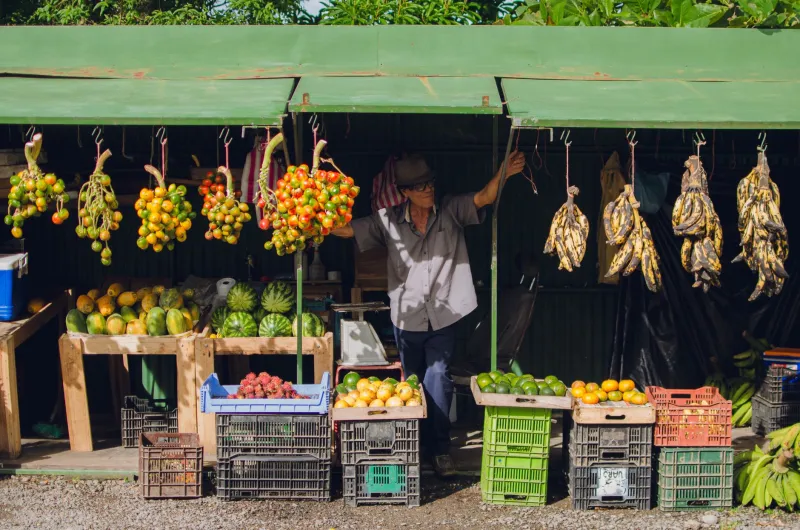
I've talked to enough Ticas — women who work in tourism, who own businesses that depend on visitors, who watch travelers perform their anti-tourist identities from behind the counter — to know that the condescension embedded in "I'm not like those tourists" lands exactly as condescendingly as it sounds. The woman selling pineapple on the roadside doesn't care whether you found her through a travel blog or a tour bus. She cares whether you buy the pineapple.
What the Guilt Is Actually About
The travel guilt that many of us carry — the low-grade anxiety about our footprint, our privilege, our presence in places we weren't born — is not entirely without basis. Tourism does cause real harm in some contexts: overtourism degrades ecosystems, gentrification displaces local residents, exploitative operators extract money without returning it to communities. These are legitimate concerns.
But guilt, as a primary response, tends to make us useless. It turns the trip into a referendum on our own worthiness rather than an actual engagement with the place and people in front of us. And it produces a particular kind of performative ethics — the conspicuous recycling, the aggressive avoidance of anything that looks like tourism, the breathless insistence that we're different — that is more about managing our own feelings than about doing anything genuinely good.
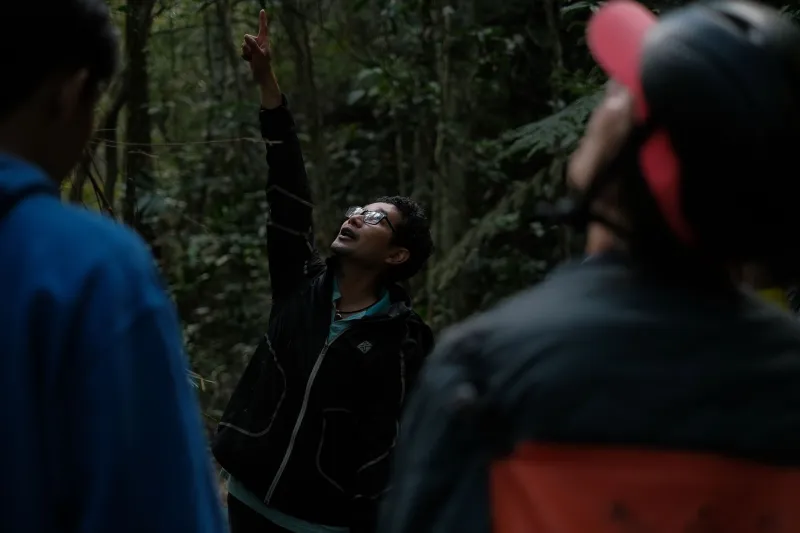
María José, who guides women's hiking tours in the Central Valley, is direct about this: "The travelers who feel the most guilty are sometimes the hardest to guide. They want me to tell them they're doing it right. They're not really here — they're in their head, worrying about being here."
The travelers who are actually present, she says, are the ones who ask real questions, make real mistakes, laugh at themselves, and engage with what's actually in front of them. Some of them are on their first international trip. Some of them have never left the US before. Some of them are on a tour bus.
The Liberation of Accepting What You Are
When I stopped fighting the word tourist, something genuinely shifted.
I started asking questions I'd been too embarrassed to ask, because asking them felt too basic, too obviously foreign. I took a cooking class that I might have previously dismissed as "too touristy." I went to the butterfly garden in La Paz that every guidebook mentions, and it was extraordinary. I bought a painted ox-cart magnet because I liked it, not because it was a carefully considered cultural artifact.
I also started spending more intentionally, because I'd stopped spending performatively. When you're not buying things to prove you understand a place, you buy what you actually want. When you're not avoiding tours because you're afraid of looking like a tourist, you can choose tours based on what they actually offer — and who runs them.
I booked a coffee tour run by a third-generation farming family in Naranjo. I took a women-led birdwatching walk in the Osa. I ate at the soda that had a line of locals out the door, not because it made me feel authentic, but because the food smelled incredible and I was hungry.
None of that required me to pretend I was something other than what I was.
What Ticas Actually Want From Visitors
I asked this question directly to several women — a tour guide, a restaurant owner, a craft vendor, a hostel manager. The answers were remarkably consistent.
Respect, not reverence. They don't want to be treated as exotic or as props in your personal growth journey. They want to be treated like people running businesses and living lives.
Curiosity without entitlement. Asking questions is welcome. Assuming you understand the country because you've read about it is not.
Money that stays local. This one came up every time. Book directly with local operators. Eat at locally owned restaurants. Buy from artisans, not airport gift shops stocked by large distributors. This is more meaningful than any ethical posture.
Presence over performance. Show up. Pay attention. Be where you are instead of managing how your being there looks.
None of this requires you to be anything other than a tourist. It requires you to be a thoughtful one — which is a different project entirely.
Responsible Travel Without the Shame Spiral
Here's what I actually believe after years of traveling and a few trips to Costa Rica that have fundamentally changed how I move through the world:
You can care about your impact without making your impact the center of the trip. You can spend money in ways that support local economies without treating every purchase as a moral test. You can visit a waterfall that a thousand other people have visited and still have a genuine experience there.
The most responsible thing you can do isn't to disappear into the landscape or pretend you're not foreign. It's to show up honestly — as a visitor with curiosity and spending power and limited time — and engage with that reality rather than running from it.
Doña Carmen's soda doesn't need you to be anything other than hungry. The women-led tour operator doesn't need you to be anything other than a paying client who treats her guides with respect. The artisan in the market doesn't need you to understand the full cultural history of what she's selling. She needs you to look her in the eye, ask a real question if you have one, and decide whether you want to buy the thing.
Tourist. I'm a tourist. It turns out that's enough.