Broken Spanish, Big Heart: Why Imperfect Communication Opens More Doors in Costa Rica Than Fluency Ever Could
Let's get one thing out of the way: the idea that you need near-fluent Spanish to have a meaningful experience in Costa Rica is one of the most persistent — and most limiting — myths in travel culture. It keeps women at home. It keeps them on resort property. It keeps them at arm's length from the very people and moments that would make their trip unforgettable.
Here's the truth, from someone who has watched it play out on dusty market floors, inside tiny sodas, and along jungle trails: effort beats fluency every single time.
The Real Language of Costa Rica Isn't Spanish — It's Warmth
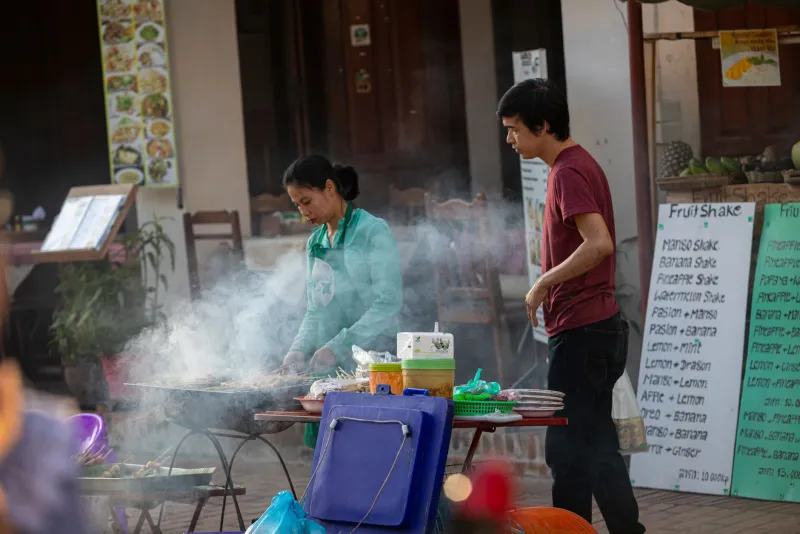
Ticos (Costa Ricans) are, as a culture, genuinely warm toward people who try. Not perform. Try. There's a difference. When you walk into a family-run soda in Dominical and attempt to order in broken Spanish, stumbling over casado and accidentally asking for a married man instead of a lunch plate, the woman behind the counter doesn't roll her eyes. She laughs — with you — and then she helps you get it right. That moment of shared laughter? That's a connection. That's the beginning of something real.
Costa Rica's tourism infrastructure is relatively well-developed, and many locals in popular destinations speak at least some conversational English. But leaning on that as a crutch the entire trip means missing out on the texture of daily life in places where English isn't the default. The smaller the town, the more your willingness to try Spanish signals respect — and respect is currency everywhere.
A Few Phrases That Actually Work in Real Life
Forget the textbook. Here are the phrases that actually move the needle when you're navigating real situations:
- "¿Me puede ayudar?" — Can you help me? Simple, direct, and it immediately signals that you're open and humble. People respond to it.
- "No entiendo, pero quiero aprender." — I don't understand, but I want to learn. This one is a game-changer. Locals appreciate the vulnerability.
- "¿Cómo se dice...?" — How do you say...? Turn any moment into a mini language lesson. Ticas especially love teaching.
- "Qué rico/qué bonito" — How delicious / how beautiful. These two phrases will carry you through markets, meals, and scenic overlooks with nothing but goodwill.
- "Pura vida" — Obviously. But know that it's not just a greeting. It's an acknowledgment of life's goodness. Use it and mean it.
- "Perdón, soy gringa y estoy aprendiendo." — Sorry, I'm American and I'm learning. Self-deprecating, honest, and it almost always gets a warm smile.
What Happens When You Just... Lean In
Sarah, a solo traveler from Portland who spent three weeks in the Osa Peninsula last year, doesn't speak Spanish beyond a few basics. She told us about an afternoon in Puerto Jiménez when she got completely turned around trying to find a trailhead. She ended up at a small tienda, phone dead, map useless, attempting to explain her situation to the owner using a combination of hand gestures, a hand-drawn sketch on a receipt, and the word montaña repeated with increasing desperation.
What followed was a 45-minute adventure involving three neighbors, a hand-drawn map on the back of a paper bag, and an invitation to come back for coffee the next morning. She went. The owner's teenage daughter spoke some English. The owner spoke none. They spent an hour looking at photos on each other's phones, pointing and laughing and teaching each other words. Sarah still texts her.
That story isn't unusual. It's actually pretty common when you stop trying to be smooth and start being present.
The Specific Scenarios Where Language Gaps Become Gifts
At the farmers' market: Don't just point and pay. Ask "¿Qué es esto?" (What is this?) about something unfamiliar. Nine times out of ten, the vendor will hand you a sample and say the name slowly, watching your face for reaction. You'll learn what mamón chino is. You'll probably buy three.
On buses: Long-distance buses in Costa Rica are social spaces. Sitting next to someone and smiling, offering a simple "¿Va a San José?" (Are you going to San José?) can open a conversation that lasts the whole ride. Use Google Translate as a bridge, not a replacement — hold up your phone, let them read your message, watch their face light up when they realize you're genuinely interested in talking.
In surf towns: The surf community has its own universal language — nods, hand signals, the shared experience of getting worked by a wave. You don't need words to bond over a wipeout. But learning "¿El mar está bueno hoy?" (Is the ocean good today?) will make any local surfer grin.
With women artisans: In places like Sarchí or the indigenous Boruca communities, women artisans often don't speak English, but they speak the language of craft. Watching, asking to try, expressing genuine admiration — these things communicate more than any phrase book. "Usted es muy talentosa" (You are very talented) lands differently when you've spent ten minutes genuinely watching someone work.
Tools That Actually Help (Without Replacing the Human Moment)
Google Translate's camera function is genuinely useful for menus, signs, and handwritten notes. Download Spanish offline on the app before you go. iTranslate Voice works well in noisy environments. But use these as bridges, not walls — show the person you're with that you're trying to understand them, not just the words.
A small physical notebook where you write down words you learn throughout the trip is both practical and deeply personal. Locals notice when you pull it out to add something they taught you. It says: you matter enough to remember.
The Bigger Truth About Language and Travel
Here's what nobody's going to tell you in a phrasebook: the most meaningful travel moments rarely happen because of perfect communication. They happen because of imperfect, earnest, slightly chaotic attempts to reach across the gap between two people who were raised in entirely different worlds.
Vulnerability is a universal language. So is laughter. So is the look on a stranger's face when she realizes you genuinely want to know her name, not just the name of the dish she's selling.
Costa Rica will meet you where you are. You don't have to arrive fluent. You just have to arrive open.
And maybe practice "qué rico" before you go, because the food alone will require you to say it approximately forty times a day.