How Pura Vida Rewired My Hustle: The Unexpected Career Advice Hidden in Costa Rica's Slowest Moments
How Pura Vida Rewired My Hustle: The Unexpected Career Advice Hidden in Costa Rica's Slowest Moments
There's a particular kind of guilt that lives in the chest of an ambitious woman. You know the one — it flares up the moment you sit still too long, the second your to-do list goes untouched past noon. American hustle culture has a way of making rest feel like a character flaw, and for a lot of us, that guilt is basically background noise by now.
So when people talk about Costa Rica's pura vida — the country's unofficial national philosophy, loosely translated as "pure life" but meaning something closer to this moment is enough — it's easy to dismiss it as a cute tourism slogan. A thing you say when your flight gets delayed or your Airbnb Wi-Fi cuts out.
But spend a little time here, and something shifts. The philosophy has a way of getting under your skin in the best possible way. And for the women who've come to Costa Rica chasing rest, clarity, or a change of scenery — many of them have left with something they didn't expect: a sharper sense of purpose and, paradoxically, a fiercer creative drive.
The Burnout-to-Breakthrough Pipeline Is Real
Marcela Torres, a marketing consultant from Austin, Texas, booked a two-week solo trip to the Osa Peninsula after what she describes as "a full-body system crash." She'd been running her own agency for four years, sleeping five hours a night, and measuring her worth in billable hours.
"I genuinely thought I was going to Costa Rica to do nothing," she says. "And for the first three days, I panicked about doing nothing. I kept opening my laptop just to feel normal."
By day five, something changed. She started waking up with the howler monkeys at dawn, drinking coffee on her porch, and letting the morning just be a morning. No Slack. No metrics dashboard. No content calendar.
"By the end of the second week, I had restructured my entire agency model in my head. Ideas just came. I wasn't forcing them — they surfaced because I finally gave them room."
Marcela isn't an anomaly. Talk to enough female entrepreneurs and digital nomads who've spent real time in Costa Rica — not a long weekend in Tamarindo, but genuine, unhurried time — and you'll hear a version of this story again and again.
What Pura Vida Actually Means (And What We Get Wrong About It)
It's worth unpacking the philosophy a little, because it's frequently misunderstood by travelers who assume it's just a synonym for laziness or indifference.
Pura vida isn't about doing less. It's about being present in what you're doing. Costa Ricans use the phrase as a greeting, a farewell, a response to "how are you," and an expression of gratitude. It's a whole orientation toward life — one that prioritizes connection, nature, and genuine enjoyment over the relentless accumulation of achievements.
For a country that consistently ranks among the happiest in the world (Costa Rica has appeared in the Happy Planet Index's top spots multiple times), there might be something worth paying attention to here. This isn't a culture that's failing to thrive. It's a culture that's defined thriving differently.
And that distinction? It hits differently when you're a woman who's been told her whole life that slowing down is falling behind.
The Nosara Effect: When the Wi-Fi Drops and Your Brain Lights Up
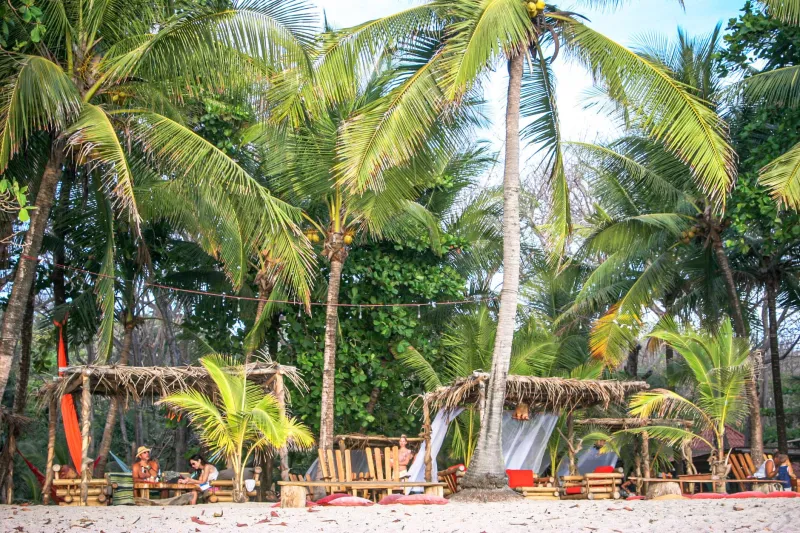
Nosara, a small Pacific coast town that's become something of a magnet for wellness seekers and remote workers, has its own particular magic. The roads are still mostly unpaved. The howler monkeys are louder than your alarm. The surf is consistent, the yoga studios are excellent, and the community of women who've landed here — some for a week, some permanently — is quietly extraordinary.
Jamie Okonkwo, a UX designer from Brooklyn, came to Nosara for a yoga retreat and ended up extending her stay by six weeks.
"I designed my best work while I was there," she says, laughing a little at how strange that still sounds to her. "I was working maybe five or six hours a day instead of ten or twelve. But everything I produced was more intentional. I stopped second-guessing myself constantly. I think because I wasn't exhausted, I actually trusted my instincts."
This tracks with a growing body of research on creativity and cognitive performance — the science has been saying for years that overwork degrades decision-making, stifles creative thinking, and leads to diminishing returns. What Costa Rica does is make you feel that truth rather than just knowing it intellectually.
Redefining What "Getting Ahead" Even Means
One of the more quietly radical things about spending time in a pura vida culture is that it forces you to interrogate your own definitions. Ahead of what, exactly? Toward what finish line?
These aren't comfortable questions for women who've worked hard to build something — a career, a business, a reputation. Ambition isn't the enemy here. But Costa Rica has a way of asking you whether your ambition is actually yours, or whether you've just absorbed someone else's metrics for success.
Several women I spoke with described returning home from Costa Rica and making significant changes — not abandoning their goals, but restructuring how they pursued them. Fewer meetings. More protected creative time. Actual lunch breaks. Saying no to projects that paid well but drained everything else.
"I stopped wearing exhaustion like a badge," says Torres. "That was the biggest shift. I used to brag about how busy I was. Now that actually embarrasses me a little."
How to Let Pura Vida Work on You (Without Forcing It)
If you're planning a trip to Costa Rica and you're hoping to access some of this reset energy, a few things worth knowing:
Give it more than a weekend. The decompression takes time. Most women describe the first few days as genuinely uncomfortable — the stillness feels wrong before it feels right. Build in at least a week, ideally two.
Get away from the tourist conveyor belt. The all-inclusive resorts are lovely, but they're not where pura vida lives. Stay somewhere small and locally owned. Eat where the locals eat. Let your days have some unstructured time in them.
Resist the urge to optimize your relaxation. Yes, there are incredible yoga retreats and wellness programs here — and they're worth exploring. But some of the most transformative moments women describe are the unplanned ones. The afternoon that turned into a three-hour conversation with a stranger. The morning you just watched the ocean.
Bring your journal, not your content calendar. Let the ideas come without immediately turning them into deliverables. Costa Rica is not content. It's medicine.
The Productive Paradox
Here's the thing nobody tells you about pura vida: it's not the opposite of ambition. It might actually be the most ambitious thing you can do for yourself.
When you stop performing busyness and start investing in genuine restoration, you come back sharper, more creative, and more certain of what you actually want. The women who've experienced this don't talk about Costa Rica as a place they escaped to. They talk about it as a place that helped them return to themselves.
And in a culture that profits from our exhaustion — that sells us productivity hacks and hustle mantras and the constant low hum of not enough — choosing to slow down on purpose is, honestly, a pretty radical act.
Pura vida, chica. It just might change everything.