The Women Behind the Stove: Finding Costa Rica's Real Food Culture in Sodas and Street Markets
The best meal I ever had in Costa Rica cost less than four dollars and came on a plate the size of a hubcap. Rice and beans cooked together until they were something entirely new. A piece of chicken that had clearly been marinated overnight in something I couldn't identify but immediately needed to know about. Fried plantains soft enough to cut with a fork. A little cup of Lizano sauce on the side, because of course.
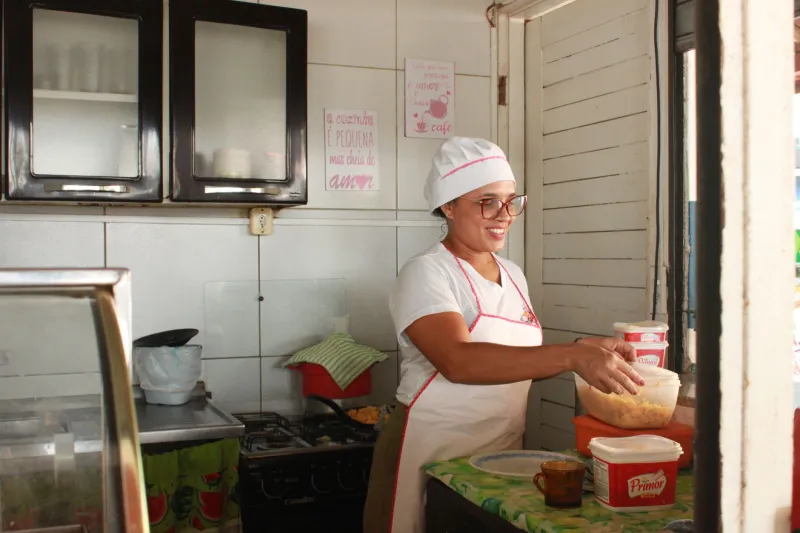
The woman who made it was maybe sixty-five, wearing an apron over a floral blouse, and she was watching a telenovela on a small TV mounted in the corner of her soda while somehow managing four orders at once. She didn't speak English. I spoke approximately forty words of Spanish. We communicated entirely through pointing, nodding, and the universal language of someone handing you exactly what you needed.
That meal told me more about Costa Rica than a week of resort brunches ever could.
What's a Soda, and Why Does It Matter?
For the uninitiated: a soda in Costa Rica is not a carbonated beverage. It's a small, informal restaurant — often family-run, almost always inexpensive, and reliably the best food in any given town. Think of it as the diner of Costa Rica, except the food is usually better and the portions are genuinely generous.
What doesn't always get mentioned in the guidebooks: a significant number of sodas are run by women. Mothers, grandmothers, daughters who learned from mothers who learned from grandmothers. The recipes are often decades old. The techniques are not written down anywhere. And the cultural knowledge embedded in a plate of casado — the traditional lunch combination of rice, beans, protein, salad, and plantains — is the kind of thing you can't get from a cooking class at a boutique hotel.
These spaces are where Costa Rican food culture actually lives. And as a female traveler, you are uniquely positioned to access them.
Meeting the Women Who Feed the Country
Doña Rosa has been running her soda in the Central Market of San José for twenty-two years. The stall is narrow — maybe eight feet wide — with a counter, four stools, and a kitchen that seems to operate on a different law of physics than the rest of the universe. On a busy morning, she'll serve sixty breakfasts.
"My mother had a stall here before me," she said, not looking up from the eggs she was scrambling. "And her mother sold tamales in this market before that. We have always been here."
The Mercado Central in San José is one of the best places to start if you want to understand this food tradition. It's loud and a little chaotic and absolutely worth it. The market has been operating since 1880, and the women who cook there are carrying on something much older than any restaurant review could capture. Go for breakfast — gallo pinto with egg and natilla (a local sour cream) is the move — and go early, before the tourist rush.
In the Caribbean coastal town of Puerto Viejo, the food story shifts. Here, Afro-Caribbean culinary traditions shape everything, and the women cooking in the sodas and small restaurants along the main drag are working with flavors — coconut milk, scotch bonnet peppers, fresh fish, rice and beans cooked in coconut — that are distinct from the Central Valley style. Seek out places where the menu is handwritten and the dining room is someone's actual living room. Those are the right places.
Ana Lucía, who runs a small restaurant in Nosara, described her food philosophy simply: "I cook what my grandmother cooked, but I also cook what is here, what is fresh. Every day is a little different. That's how it should be."
How to Find These Places (and How to Act When You Do)
The honest answer is that the best sodas are not always on Google Maps. Some are. Many aren't. Here's how to find them:
Ask women. Seriously. If you're staying at a locally-owned guesthouse, ask the woman running it where she eats lunch. If you're at a pharmacy or a small shop, ask the woman behind the counter. "¿Dónde come usted?" (Where do you eat?) will get you further than any app.
Look for the handwritten sign. Plastic laminated menus with photos are usually a signal that the place has optimized for tourists. A handwritten menu, or a chalkboard, or someone just telling you what they have today — that's the soda you want.
Follow the workers. It's a cliché because it's true. The construction crew eating lunch somewhere, the market vendors on their break, the school teachers at noon — they know where the food is good and the price is right.
Go at local mealtimes. Lunch in Costa Rica is the main meal of the day, typically between noon and 2 p.m. That's when sodas are doing their best work. Don't show up at 3 p.m. and wonder why the casado is sold out.
Once you're there: be patient, be curious, and be willing to point at what the person next to you is eating. A little Spanish goes a long way — "¿Qué recomienda?" (What do you recommend?) is a sentence worth memorizing. And tip. Always tip, even when it's not expected. These women are working incredibly hard.
The Market Experience Beyond Just Eating
Female-run food markets in Costa Rica are more than restaurants. They're community spaces, social hubs, and living archives of culinary knowledge. Spending time in them — not just eating and leaving, but sitting, watching, being present — is one of the more quietly profound things you can do as a traveler.
The Feria del Agricultor (Farmer's Market) happens in towns across the country, usually on weekends. Women vendors sell everything from fresh produce to prepared foods to homemade hot sauce. These markets are where you'll find the ingredients behind the recipes — the culantro coyote (a local herb that's not quite cilantro but adjacent), the chayote squash, the palmito (heart of palm) that shows up in so many dishes.
Buying directly from the women who grew or made something is a small act with real impact. It's also, frankly, more interesting than anything you'll find at a souvenir shop.
Why This Is the Trip Inside the Trip
There's a version of visiting Costa Rica that keeps you at a comfortable distance from actual Costa Rican life — beautiful resorts, excellent eco-tours, lovely beaches. None of that is wrong. But the food is where the distance collapses.
When Doña Rosa hands you a plate she made with her hands using a recipe she learned from her mother, something real is being shared. When you sit at a counter in a market and eat the same lunch that the woman next to you eats every Tuesday, you're inside the culture in a way that no tour can manufacture.
Costa Rica's female cooks and market vendors are not tourist attractions. They're people doing their work. The gift of being welcomed into that — even briefly, even imperfectly — is one of the best things this country offers.
Don't eat it in a hurry. Don't photograph the plate before you've said thank you. Just eat, and pay attention.