She's Running Her Business From a Beach Town in Costa Rica — And She's Not the Only One
She's Running Her Business From a Beach Town in Costa Rica — And She's Not the Only One
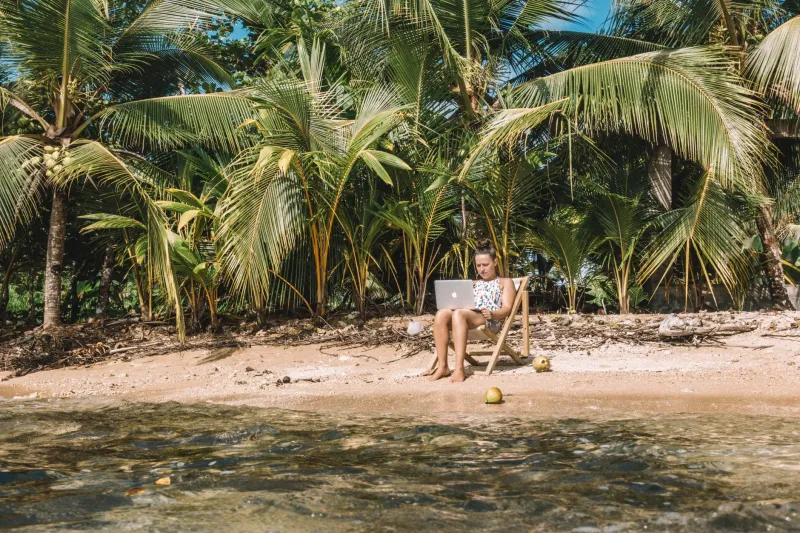
Somewhere between her third client call of the morning and a late lunch of gallo pinto with a view of the Pacific, Melissa Okafor realized she wasn't going back. The Atlanta-based brand strategist had originally booked a three-week workcation in Nosara. That was fourteen months ago.
"I thought I was taking a break," she laughs. "Instead I tripled my revenue and found my first business partner. She was sitting two tables away from me at the same co-working space."
This kind of story is not unusual in Costa Rica right now. The country has been building a quiet reputation as one of the most genuinely livable remote work destinations in the Western Hemisphere — and women, particularly women building their own ventures, are paying attention.
Why Costa Rica Hits Different for Female Founders
Let's be honest: not every "digital nomad paradise" lives up to the hype when you factor in safety, community, and the specific kind of support that women running businesses actually need. A place can have fast internet and cheap coffee and still feel isolating, even unsafe, if you're a woman traveling solo or building something from scratch without a local network.
Costa Rica keeps coming up in conversations among female entrepreneurs for reasons that go beyond the logistics. The country consistently ranks among the safest in Latin America. It has a stable democracy, solid healthcare infrastructure, and a cultural ethos — that famous pura vida philosophy — that genuinely values quality of life over grinding productivity for its own sake. For women who've spent years in hustle-culture environments, that reframe alone can be transformative.
But it's also about what's been deliberately built here. Over the past several years, a wave of women-led initiatives has created co-working spaces, peer networks, and community structures that are specifically designed with female founders in mind.
The Spaces That Are Doing It Right
In Santa Teresa, the wild, wind-swept surf town on the Nicoya Peninsula, co-working spaces have evolved well beyond rows of desks and a shared printer. Several spots now host regular programming aimed at women — founder roundtables, skill-share workshops, even informal mentorship circles that form organically among the women who keep showing up.
"There's a culture of generosity here that I haven't experienced in co-working spaces back home," says Priya Nair, a UX designer from San Francisco who spent six months based in Santa Teresa. "Women are sharing contacts, making introductions, hyping each other's work. It doesn't feel competitive. It feels collaborative in a way that actually moves the needle."
Farther inland, in the cooler mountain air of San Ramón and the surrounding coffee country, a different kind of scene has developed — quieter, more focused, better suited to deep work and creative projects that need sustained concentration. The trade-off is community density; you'll find fewer people, but the ones who are there tend to be seriously committed to what they're building.
For women who want both — the energy of a buzzy coastal scene and genuine access to a professional network — Tamarindo and the greater Guanacaste region offer a middle ground. The infrastructure is strong, the expat community is substantial, and there are enough established businesses run by women that finding a local mentor or collaborator isn't a long shot.
Safety as Infrastructure
Here's something that doesn't get said enough in digital nomad content: feeling physically safe isn't a bonus feature. It's foundational. When you're not spending mental energy calculating risk every time you walk somewhere after dark or figure out a new neighborhood, you have more bandwidth for everything else — your work, your creativity, your actual enjoyment of where you are.
Costa Rica isn't without its cautions — petty theft exists, certain areas require more vigilance than others, and like anywhere, it pays to stay informed and trust your instincts. But the baseline sense of security that most women describe here is meaningfully different from other popular nomad destinations.
Beyond physical safety, many of the women-led communities in Costa Rica have built informal safety networks: WhatsApp groups where members share real-time updates, vetted lists of trusted transportation providers, and a culture of looking out for each other that extends beyond the co-working space. This is community infrastructure, and it matters.
Choosing Your Base: A Quick Breakdown
Not every corner of Costa Rica will suit every work style. Here's a rough guide:
Nosara — Best for the entrepreneur who wants to blend serious focus with a wellness lifestyle. Yoga, surf, and a surprisingly strong professional community. WiFi has improved dramatically. Higher price point, but the community is tight and intentional.
Santa Teresa — High energy, creative, social. Great if you thrive on spontaneous collaboration and don't mind a bit of chaos. The road situation (notoriously rough) is part of the charm, or the deal-breaker, depending on your personality.
San José — Underrated as a base for women who want urban infrastructure: fast internet, excellent coffee shops, easy access to the rest of the country. The city has a growing startup ecosystem and several excellent co-working spaces. Less Instagram-ready than the coast, more practical.
Puerto Viejo (Caribbean Coast) — Slower pace, deeply multicultural, stunning natural environment. A strong fit for creative entrepreneurs and writers. Community is smaller but deeply welcoming. Rainy season is real here — plan accordingly.
Monteverde — For the founder who needs altitude and quiet. Cloud forest energy, excellent coffee, and a pace that almost forces you to think more slowly and clearly. Not for everyone, but for the right person, it's everything.
What Women Are Actually Building Here
The range of businesses being run out of Costa Rica by women is genuinely impressive: marketing agencies, wellness brands, software startups, coaching practices, editorial companies, e-commerce operations. What they have in common is less about industry and more about intention — most of these founders made a deliberate choice to build their business from a place that aligned with their values, not just their spreadsheet.
"I kept waiting for permission to do it differently," says Jordan Whitfield, a Chicago-based copywriter who relocated to Tamarindo two years ago. "Costa Rica was where I finally stopped waiting. Something about the culture here — the way people actually prioritize living — gave me permission to build a business that fit my life instead of the other way around."
That might be the most honest thing anyone can say about what makes this place different. It's not just the co-working spaces, or the safety, or the community, though all of those things are real. It's the permission structure. Costa Rica has a way of showing ambitious women that they don't have to choose between building something serious and actually enjoying the life they're building it in.
Pura vida isn't just a phrase. For a lot of women here, it's a business model.