How Costa Rican Women Cured My Obsession With Being Smaller
I counted the calories in a mango on my first morning in Costa Rica. I'd been doing that kind of mental math for so long it was automatic — the way some people hum without noticing. The woman at the fruit stand handed me a slice, juice already running down her wrist, and said "cómelo, está dulce" — eat it, it's sweet. Not a suggestion. A gift.
I ate it. And then I stood there, sticky-fingered in the San José heat, realizing I couldn't remember the last time food felt like a gift.
That was the beginning of something I didn't have a name for yet.
What I Brought With Me (That I Didn't Know I Was Carrying)
I'd spent my thirties in a low-grade war with my own body. Not the dramatic kind you read about in memoirs — no hospitalizations, no intervention. Just the quieter American version: the constant recalibrating, the "I'll eat that on Friday," the gym sessions that were really punishments disguised as self-care. I called it being "health-conscious." My therapist called it something else.
I came to Costa Rica for a month-long solo trip that turned into three. I wasn't looking for healing. I was looking for a break from my inbox.
What I found instead was a completely different operating system for being a woman in a body.
Curves Aren't a Problem Here — They're the Point
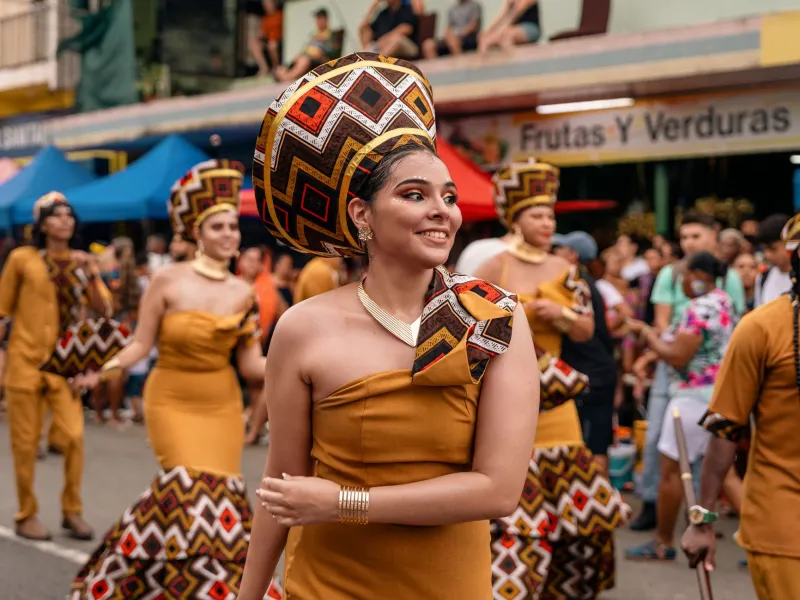
The first thing I noticed was how Tica women dressed. Not modestly, not apologetically — boldly. Women with full hips wore fitted skirts. Women with soft stomachs wore crop tops to the beach. There was no visible performance of "working on it" or "getting back to where I was." Bodies just... existed. Publicly. Without commentary.
In the US, I'd internalized this idea that visible curves were something to be managed — minimized with the right cut, apologized for with the right attitude. In Costa Rica, that logic simply didn't translate. When I mentioned to my host, a warm, no-nonsense woman named Patricia, that I was "trying to eat better," she looked at me like I'd said something mildly confusing. "Better than what?" she asked. "You look healthy."
Healthy. Not thin. Not almost there. Healthy, as in: functioning, alive, capable.
That word rearranged something in me.
Fitness as Function, Not Punishment
I joined a morning walking group in the neighborhood where I was staying — a loose collection of women ranging from their thirties to their seventies who met at 6 a.m. to walk the hills before the heat settled in. Nobody talked about burning calories. Nobody wore a fitness tracker (or if they did, they weren't narrating it). They talked about their kids, their neighbors, a mango tree someone's uncle had planted forty years ago.
The movement was incidental to the living. That's the only way I know how to say it.
Back home, I'd treated exercise as a transaction: effort in, body change out. Here, women moved their bodies because bodies are meant to move — to carry groceries up steep streets, to dance at a quinceañera, to wade into the ocean. The goal wasn't aesthetic. It was participation.
I stopped tracking my steps somewhere around week three. I didn't notice until week five.
The Table as a Place to Actually Sit
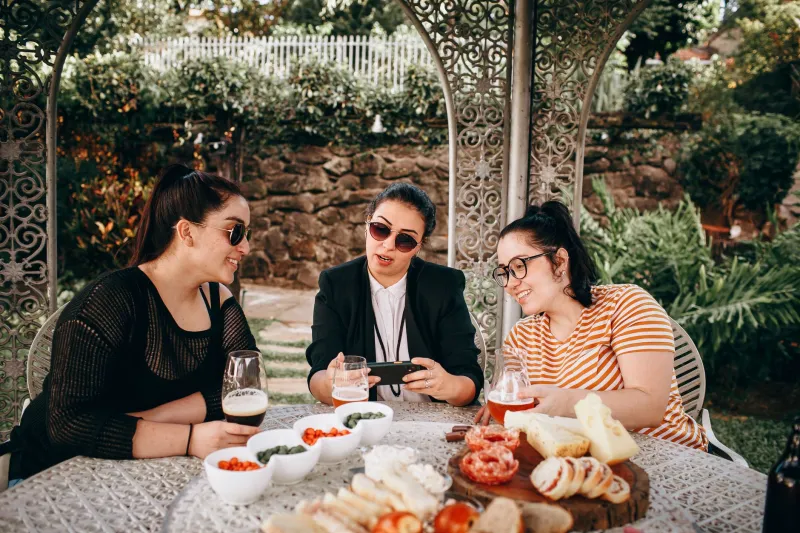
Food in Costa Rica is relentlessly communal. You eat with people. You eat what's made. You eat again when someone's grandmother insists, which is always.
The soda I ate at most mornings — a tiny family-run spot near the market — served a casado that I would have previously dismantled in my head: rice, beans, plantains, a fried egg, a little salad. In my old life, I'd have eaten the egg and the salad and quietly moved the rest around. Instead, I ate it. All of it. While talking to the woman who cooked it about whether the rain was coming early this year.
Nothing bad happened. My body did not betray me. I did not need to compensate.
I ate the same meal most mornings for two months, and it was one of the most quietly radical things I've ever done.
What Aging Looks Like When It's Not a Crisis
Something else I noticed: older Tica women are visible. They're not hiding behind anti-aging serums and apology. The women in their fifties and sixties I met moved through the world with a confidence that wasn't loud — it was just settled. Like they'd long since decided the question of whether they were acceptable and moved on to more interesting topics.
In the US, I'd absorbed this low-level panic about getting older, this sense that my body was on a countdown toward irrelevance. In Costa Rica, that narrative had no obvious cultural support structure. Women aged. Life continued. The mango was still sweet.
I'm Not Going to Pretend It Was Magic
Let me be clear: three months in Costa Rica didn't cure a decade of diet culture. I still catch myself doing the math sometimes. I still have days where my brain reverts to its old, punishing language.
But something shifted at a foundational level — some basic assumption got questioned and didn't quite recover. The assumption that my body was a problem to solve. That eating was a moral activity. That I needed to be smaller to be worthy of taking up space.
Costa Rican women didn't lecture me out of those beliefs. They just lived so differently that my beliefs started to look like the strange ones. Which, it turns out, they were.
If You're Traveling While Struggling
If you're heading to Costa Rica carrying some version of what I carried, here's what I'd tell you:
Eat the casado. All of it. At the soda, with the people who made it.
Move because the landscape demands it — hike the trail, swim in the waterfall, walk the market. Let your body be useful rather than ornamental.
Watch the women around you. Not to compare — to learn. Notice how they inhabit space. Notice what they're not apologizing for.
Leave your tracking apps alone for at least a week. See what it feels like to eat when you're hungry and stop when you're not, with no algorithm mediating the experience.
And if a woman at a fruit stand hands you a slice of mango and tells you it's sweet — believe her. Eat it. Let it be exactly what it is.